Special Postdoctoral Researcher, RIKEN Center for Brain Science
Kenji Itao
I study the mechanisms of diverse human social structures formation, using statistical physics, complex systems theory, and cultural evolution.
Why do distant societies often end up with similar structures—e.g., kinship systems, institutions, and political organization? My view is that such similarities are generated by simple, common mechanisms. I model insights from anthropology and history, and simulate the resulting dynamics using methods inspired by statistical physics and evolutionary theory. The goal is to explain how micro-level interactions generate macro-level social structures.
contact: kenji.itao[at]riken.jp
Research
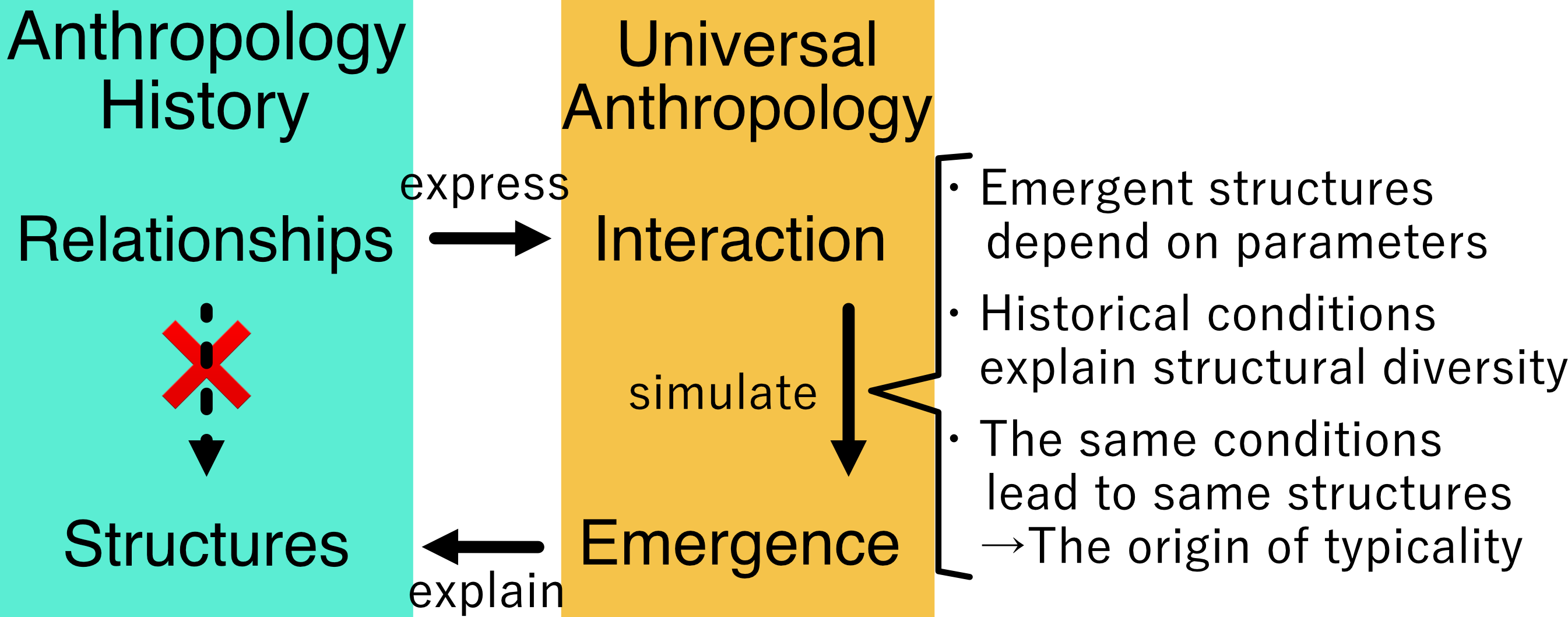
Why do geographically distant societies often develop similar cultural forms? This is one of the central questions in human history. Anthropologists and historians have long identified recurring structural patterns across cultures from different times and regions. I argue that such similarities emerge because there are underlying mechanisms that generate culture wherever humans form societies. Drawing on ideas from statistical physics and evolutionary theory, I study how micro-level interactions among individuals give rise to macro-level social structures, and pursue a theoretical framework for universal anthropology.
Selected Publications
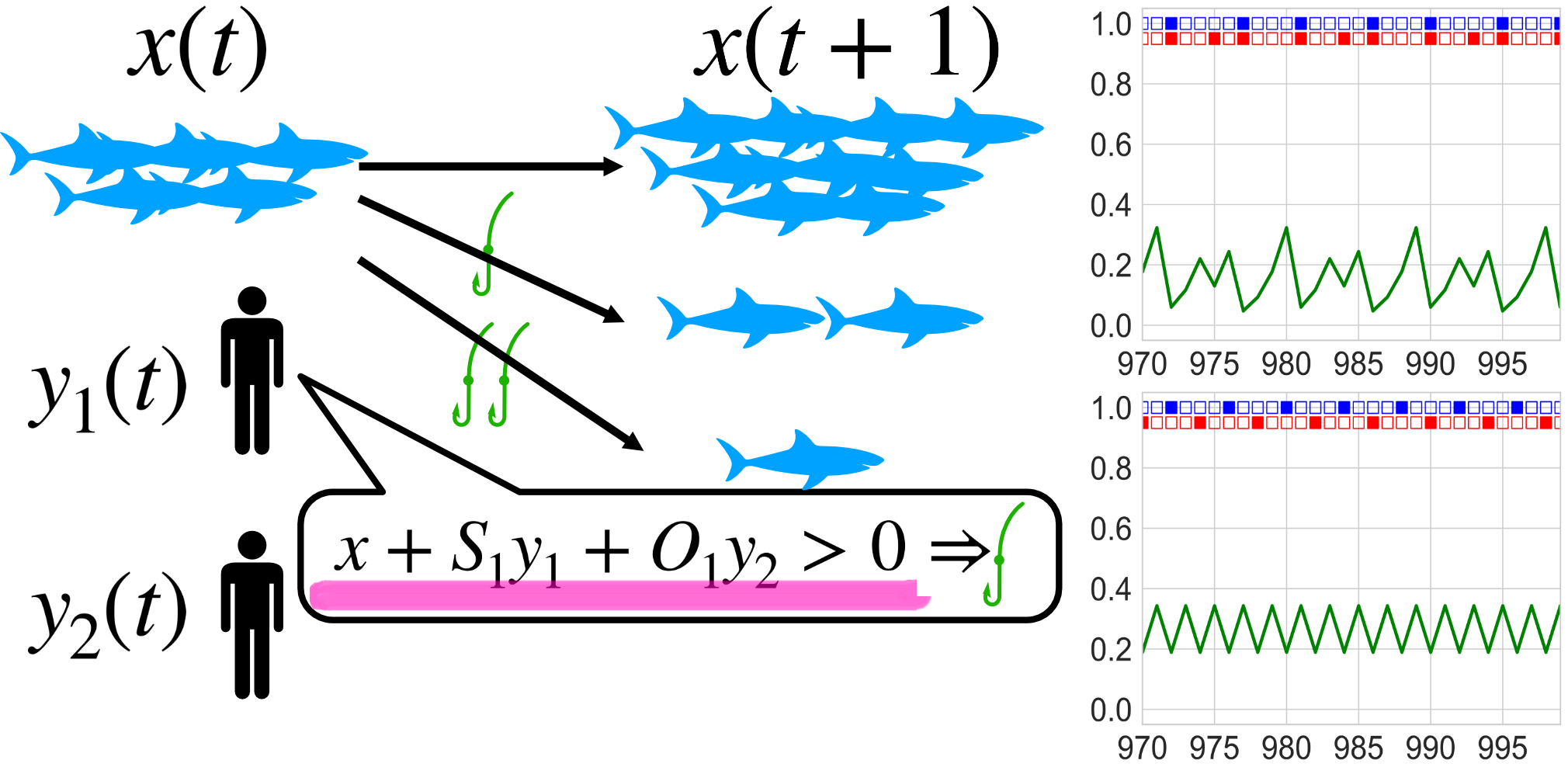
- A study on the mechanisms of the self-organization of institutions by establishing evolutionary dynamical-systems games.
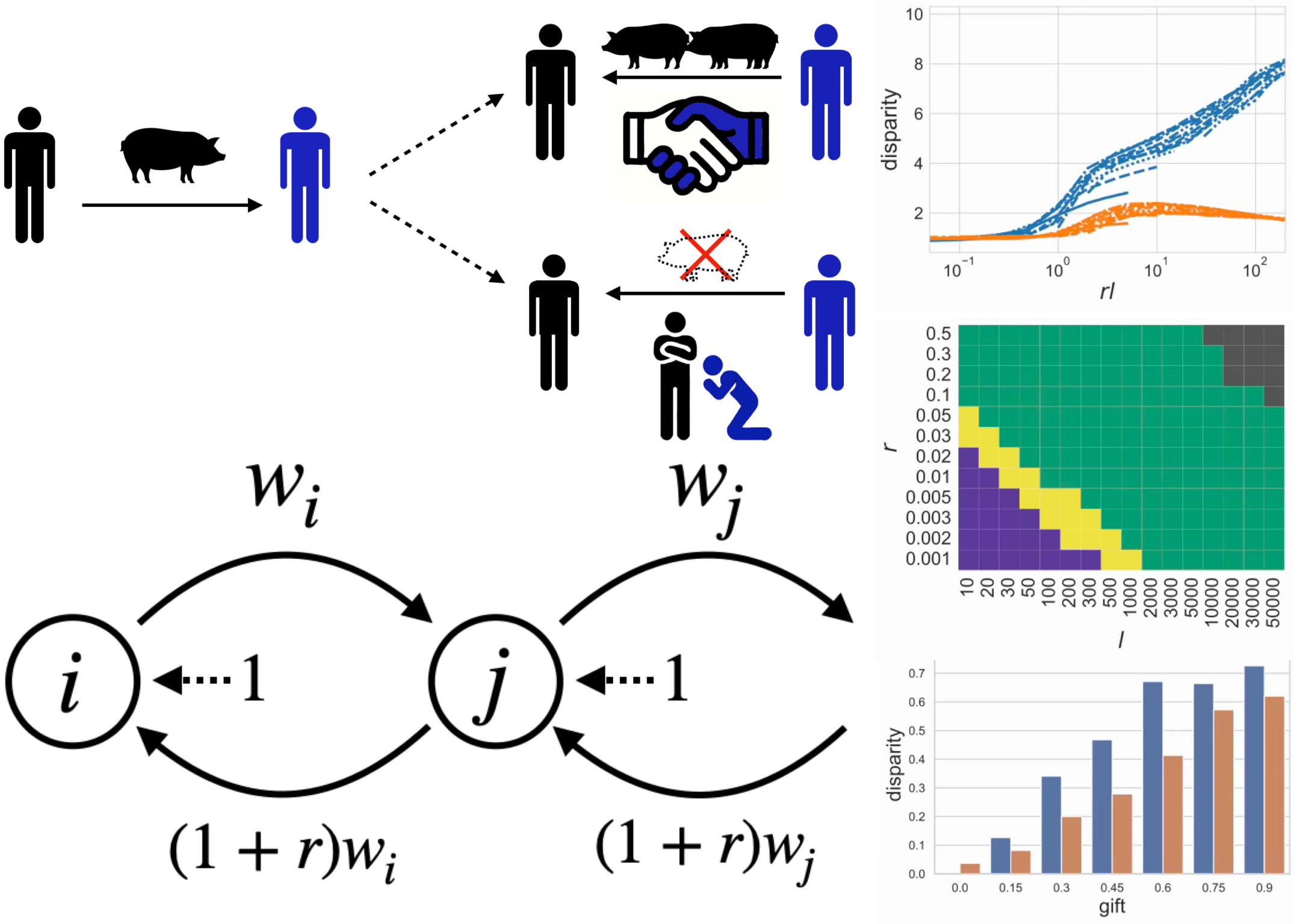
- A study showing how competitive gift-giving can generate economic and social disparities, causing the transition from band, to tribe, chiefdom, and kingdom.
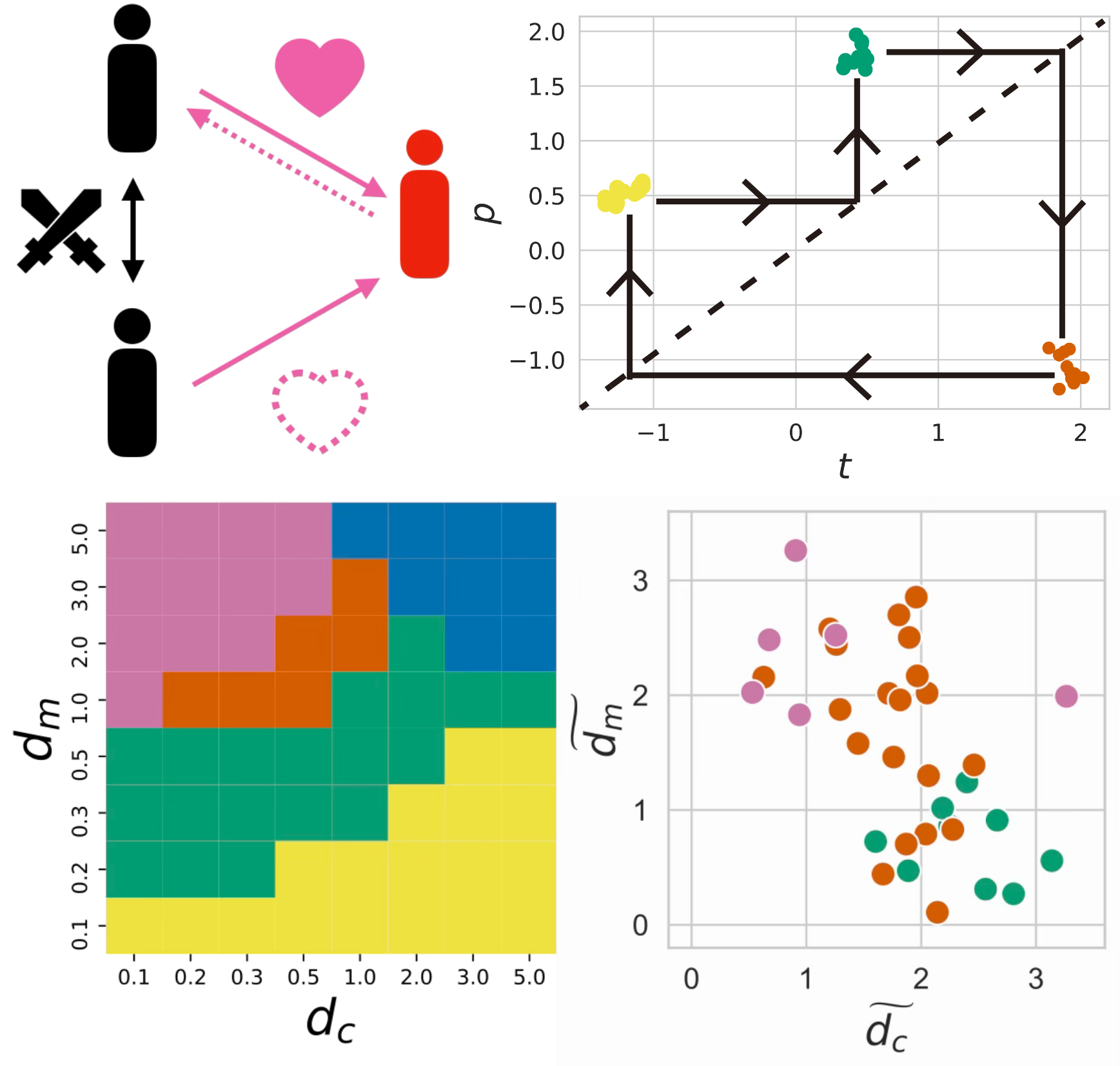
- A study on the emergence of kinship systems with specific rules—like “a son of the Sun should marry a daughter of the Moon” from a general interaction pattern in human societies: in-laws cooperate while mating rivals compete.
News
- 2026-03-17
- 2026-02-12ICET Seminar #19, “Collective Action and Mechanism Design,” was held.A talk by Ryutaro Mori (The University of Tokyo).
- 2026-01-27ACE Seminar #8, 'What Are Rituals For? Evolutionary Functions, Cross-Cultural Intuitions, and Collective Action Problems,' was held.A talk by Christopher Kavanagh (Rikkyo University).
- 2026-01-14I gave the invited talk "Self-Organized Institutions in Evolutionary Dynamical-Systems Games" at ICMMA 2025.Presented the invited talk "Self-Organized Institutions in Evolutionary Dynamical-Systems Games" at ICMMA 2025.
- 2026-01-08ICET Seminar #18, “Nature, Culture, and Innovation: Environmental Destruction as a Problem of Human Development,” was held.A talk by Ryosuke Nakadai (Yokohama National University).
- 2025-12-11ICET Seminar #17, “Cultural Differences in the Mind Supporting Cooperation: Focusing on Reputation and Institutions as Structural Foundations,” was held.A talk by Yuta Kido (The University of Tokyo).
- 2025-11-29I presented “Self-Organized Institutions in Evolutionary Dynamical-Systems Games” at HBES-J.Presented the contributed talk “Self-Organized Institutions in Evolutionary Dynamical-Systems Games” at HBES-J.
- 2025-11-18ACE Seminar #7, 'What a phylogeny of all the world’s languages can teach us about the past, present and future of human cultural diversity,' was held.A talk by Quentin D Atkinson (University of Auckland).
- 2025-11-13ICET Seminar #16, “Dynamics of Cooperative Relationships and Applications to LLM Agent Systems,” was held.A talk by Keita Nishimoto (The University of Tokyo).
- 2025-10-09ICET Seminar #15, “A Shift in Thinking in the Study of ‘Culture’: Prehistoric Japan as a Case Study,” was held.A talk by Kohei Tamura (Center for Northeast Asian Studies).
- 2025-09-22ACE Seminar #6, 'Culturomics and the Concept of Harmony Between Humans and Nature,' was held.A talk by Siyang Luo (Sun Yat-sen University).
- 2025-09-16I presented “Self-Organized Institutions in Evolutionary Dynamical-Systems Games” at the Physical Society of Japan.Presented the contributed talk “Self-Organized Institutions in Evolutionary Dynamical-Systems Games” at the Physical Society of Japan.
- 2025-09-16I delivered the Young Scientist Award commemorative lecture at the Physical Society of Japan.Presented the invited talk “Principles of the Emergence of Diverse Human Social Structures toward Constructing Universal Anthropology” at the Physical Society of Japan. This was the commemorative lecture corresponding to the 2025 Young Scientist Award.
- 2025-09-11ICET Seminar #14, “Computational Modeling of Prestige Bias: Effects of Different Cues on Cultural Evolution,” was held.A talk by Seiya Nakata (International Research Center for Neurointelligence, The University of Tokyo).
- 2025-09-01I gave the invited talk “Invitation to Universal Anthropology” at the Biophysics Summer School for Young Scientists in Japan.Presented the invited talk “Invitation to Universal Anthropology” at the Biophysics Summer School for Young Scientists in Japan.
- 2025-08-22I received the Research Encouragement Award from the Society of Evolutionary Studies, Japan.Received the Research Encouragement Award from the Society of Evolutionary Studies, Japan.
- 2025-08-20I presented “Self-Organized Institutions in Evolutionary Dynamical-Systems Games” at the Society of Evolutionary Studies, Japan.Presented the contributed talk “Self-Organized Institutions in Evolutionary Dynamical-Systems Games” at the Society of Evolutionary Studies, Japan.
- 2025-07-29ACE Seminar #5, 'Motor–environment exploration in the human developmental niche,' was held.A talk by Ryutaro Uchiyama (Singapore University of Technology and Design).
- 2025-07-10ICET Seminar #13, “Mathematical Modeling and Experimental Studies of Cooperation beyond Group Boundaries,” was held.A talk by Wakaba Tateishi (Hokkaido Musashi Women's University).
- 2025-06-23I gave the invited talk "Self-Organized Institutions in Evolutionary Dynamical-Systems Games" at Dynamics Days 2025.Presented the invited talk "Self-Organized Institutions in Evolutionary Dynamical-Systems Games" at Dynamics Days 2025.
- 2025-06-12ICET Seminar #12, “Matthew Effects, Diffusion, and Classics: Cultural Phylogenetic Analysis of Waka Using Neural Language Models,” was held.A talk by Takuma Tanaka (Shiga University).
- 2025-05-20ACE Seminar #4, 'Data scientific methods for analyzing music style evolution,' was held.A talk by Eita Nakamura (Kyushu University).
- 2025-05-08ICET Seminar #11, “Capturing Semantic Change,” was held.A talk by Daichi Mochihashi (ISM / NINJAL).
- 2025-04-24ICET Seminar #10, “What is ‘Cumulative’ in Cumulative Cultural Evolution?,” was held.A talk by Naoki Suyama (Yasuda Women's University).
- 2025-04-14I presented "Two Universal Pathways in Demographic Transition" at EHBEA 2025.Presented the contributed talk "Two Universal Pathways in Demographic Transition" at EHBEA 2025.
- 2025-04-11The paper "Self-organized institutions in evolutionary dynamical systems games" was published in Proceedings of the National Academy of Sciences.A study on the mechanisms of the self-organization of institutions by establishing evolutionary dynamical-systems games.
- 2025-03-20I received the Young Scientist Award from the Physical Society of Japan.Received the Young Scientist Award from the Physical Society of Japan.
- 2025-03-18ACE Seminar #3, 'Mental representation and decision-making in an interconnected world,' was held.A talk by Lusha Zhu (Peking University).
- 2025-03-13ICET Seminar #9, “On the Evolution of Cooperation in Division of Labor on Networks,” was held.A talk by Mayuko Nakamaru (Institute of Science Tokyo).
- 2025-02-18ACE Seminar #2, 'The Cultural Evolution of Games of Chance - A Historical Investigation of Chinese Gambling,' was held.A talk by Kevin Hong (University of Macau).
- 2025-02-05I received the Inoue Research Award.Received the Inoue Research Award from the Inoue Foundation for Science.
- 2025-01-16ICET Seminar #8, “Evolution of Cooperation through Indirect Reciprocity,” was held.A talk by Yosuke Murase (RIKEN).
- 2025-01-01I gave the invited talk "Self-Organized Institutions in Evolutionary Dynamical-Systems Games" at the APCTP/G-LAMP Workshop.Presented the invited talk "Self-Organized Institutions in Evolutionary Dynamical-Systems Games" at the APCTP/G-LAMP Workshop.
- 2024-12-12ICET Seminar #7, “Reputation Management Mechanisms in Reciprocal Cooperation,” was held.A talk by Sakura Arai (JSPS / The University of Tokyo).
- 2024-12-09I received the Young Presentation Award from the Human Behavior and Evolution Society of Japan.Received the Young Presentation Award from the Human Behavior and Evolution Society of Japan.
- 2024-12-07I presented “Two Universal Pathways in Demographic Transition” at HBES-J.Presented the contributed talk “Two Universal Pathways in Demographic Transition” at HBES-J. Received the 2024 Young Presentation Award.
- 2024-11-19ACE Seminar #1, 'Principles of the Evolution of Diverse Human Social Structures: Kinship and Gift-giving,' was held.A talk by Kenji Itao (RIKEN).
- 2024-11-14ICET Seminar #6, “Studies of Social Learning, Collective Intelligence, and Cultural Evolution Using Multi-Armed Bandits,” was held.A talk by Wataru Toyokawa (RIKEN).
- 2024-10-17ICET Seminar #5, “Legal Knowledge Graphs and the Evolution of Normative Orders,” was held.A talk by Ryohei Kuno (The University of Tokyo).
- 2024-09-22I gave the invited talk “"Self-Organized Institutions in Evolutionary Dynamical-Systems Game" at the Niels Bohr Institute.Presented the invited talk "Self-Organized Institutions in Evolutionary Dynamical-Systems Game" at the Niels Bohr Institute.
- 2024-09-09I presented "Two Universal Pathways in Demographic Transition" at CES 2024.Presented the contributed talk "Two Universal Pathways in Demographic Transition" at CES 2024.
- 2024-08-08ICET Seminar #4, “What Norms Sustain Cooperation in Large-Scale Societies?,” was held.A talk by Yuga Fujimoto (CyberAgent AI Lab).
- 2024-08-07The paper "Formation of human kinship structures depending on population size and cultural mutation rate" was published in Proceedings of the National Academy of Sciences.A study formalizing a minimal model of the evolution of kinship structures and showing the mechanisms of how the diversity of kinship structures depend on population size and cultural mutation rate.
- 2024-07-11ICET Seminar #3, “Empirical Studies on the Geographic Diversity of Cultural Traits,” was held.A talk by Yuri Nishikawa (Tokai University).
- 2024-06-13ICET Seminar #2, “Cultural Evolution of Belief Systems and Technology,” was held.A talk by Haruka Nakawake (JAIST).
- 2024-05-09ICET Seminar #1, “Principles of the Emergence of Diverse Human Social Structures,” was held.A talk by Kenji Itao (RIKEN).
- 2024-04-17I presented "Two Universal Pathways in Demographic Transition" at PAA 2024.Presented the poster "Two Universal Pathways in Demographic Transition" at PAA 2024.
- 2024-03-21I received the Ichiko Memorial Award (Doctoral) from the University of Tokyo.Received the Ichiko Memorial Award (Doctoral) from the University of Tokyo.
- 2024-01-18I received the JSPS Ikushi Prize.Received the JSPS Ikushi Prize.
- 2024-01-15Started the serialized column 'Invitation to Universal Anthropology' at Gendai BusinessI started a public-facing serialized column, 'Invitation to Universal Anthropology,' at Gendai Business.
- 2024-01-01I gave the invited talk "Two Universal Pathways in Demographic Transition" at the National Institute of Population and Social Security Research.Presented the invited talk "Two Universal Pathways in Demographic Transition" at the National Institute of Population and Social Security Research.
- 2023-09-16I presented “Emergence of Economic and Social Disparities through Gift-Giving” at the Physical Society of Japan.Presented the contributed talk “Emergence of Economic and Social Disparities through Gift-Giving” at the Physical Society of Japan.
- 2023-09-16I presented “Emergence of Kinship Structures through a Multilevel Evolutionary Model” at the Physical Society of Japan.Presented the contributed talk “Emergence of Kinship Structures through a Multilevel Evolutionary Model” at the Physical Society of Japan.
- 2023-08-12I gave the invited talk "Evolution of Kinship Structures through Marriage Interactions" at CoPhEE 2023.Presented the invited talk "Evolution of Kinship Structures through Marriage Interactions" at CoPhEE 2023.
- 2023-04-29The paper "Transition of social organisations driven by gift relationships" was published in Humanities and Social Sciences Communications.A study showing how gift relationships drive transitions in social network structure and the emergence of inequality.
- 2023-01-01I presented “Transition of Social Organization Driven by Gift Relationship” at the Anthropological Society of Nippon.Presented the contributed talk “Transition of Social Organization Driven by Gift Relationship” at the Anthropological Society of Nippon.
- 2023-01-01I presented "Evolution of Kinship Structures Driven by Marriage Tie and Competition" at the EHBEA conference.Presented the contributed talk "Evolution of Kinship Structures Driven by Marriage Tie and Competition" at the EHBEA conference.
- 2022-12-10I presented “Transition of Social Organization Driven by Gift Relationship” at HBES-J.Presented the contributed talk “Transition of Social Organization Driven by Gift Relationship” at HBES-J.
- 2022-09-21I presented "Transition of Social Organizations Driven by Gift Relationship" at CES 2022.Presented the contributed talk "Transition of Social Organizations Driven by Gift Relationship" at CES 2022.
- 2022-08-01I gave the invited talk “Transition of Social Organization Driven by Gift Relationship” at the Network Science Workshop.Presented the invited talk “Transition of Social Organization Driven by Gift Relationship” at the Network Science Workshop.
- 2022-06-01I gave the invited talk "Multi-Level Evolutionary Simulation for Anthropology and Demography" at MPIDR.Presented the invited talk "Multi-Level Evolutionary Simulation for Anthropology and Demography" at MPIDR.
- 2022-03-17I received the Student Presentation Award from the Physical Society of Japan.Received the Student Presentation Award from the Physical Society of Japan.
- 2022-03-15I presented “Transition of Social Organization Driven by Gift Relationship” at the Physical Society of Japan.Presented the contributed talk “Transition of Social Organization Driven by Gift Relationship” at the Physical Society of Japan. This presentation corresponds to the 2022 Student Presentation Award.
- 2022-02-23The paper "Emergence of kinship structures and descent systems: multi-level evolutionary simulation and empirical data analysis" was published in Proceedings of the Royal Society B: Biological Sciences.A study explaining the emergence of kinship structures and descent systems through multilevel evolutionary simulation.
- 2022-01-01I gave the invited talk “Methods of Mathematical Modeling for Social Phenomena” at the CERSS Colloquium.Presented the invited talk “Methods of Mathematical Modeling for Social Phenomena” at the CERSS Colloquium, Hokkaido University.
- 2022-01-01I gave the invited talk “"Explaining Universality and Diversity in Social Phenomena Using Evolutionary Simulation" at Complexity Science Hub Vienna.Presented the invited talk "Explaining Universality and Diversity in Social Phenomena Using Evolutionary Simulation" at Complexity Science Hub Vienna.
- 2022-01-01I gave the invited talk "Multi-Level Evolutionary Simulation for Evolutionary Anthropology" at MPI-EVA.Presented the invited talk "Multi-Level Evolutionary Simulation for Evolutionary Anthropology" at MPI-EVA.
- 2022-01-01I gave the invited talk "Explaining Universality and Diversity in Social Phenomena Using Evolutionary Simulation" at the Niels Bohr Institute.Presented the invited talk "Explaining Universality and Diversity in Social Phenomena Using Evolutionary Simulation" at the Niels Bohr Institute.
- 2021-10-20The paper "Evolution of family systems and resultant socio-economic structures" was published in Humanities and Social Sciences Communications.A study showing the evolution of family systems and their corresponding socio-economic structures using asimple model of the lifecycles of farmer families.
- 2021-10-10I received the Young Member Presentation Award from the Anthropological Society of Nippon.Received the Young Member Presentation Award from the Anthropological Society of Nippon.
- 2021-07-27I presented "Evolution of Kinship Structures Driven by Marriage Tie and Competition" at IC2S2 2021.Presented the contributed talk "Evolution of Kinship Structures Driven by Marriage Tie and Competition" at IC2S2 2021.
- 2021-06-24I gave the invited talk "Multi-Level Evolution of Families and Societies Reveals the Universality in Anthropological Phenomena" at the workshop Mathematical geographical modelling for environmental humanities.Presented the invited talk "Multi-Level Evolution of Families and Societies Reveals the Universality in Anthropological Phenomena" at the workshop Mathematical geographical modelling for environmental humanities.
- 2021-06-11I received the Local Student Presenter Award from the Cultural Evolution Society.Received the Local Student Presenter Award from the Cultural Evolution Society.
- 2021-06-09I presented "Evolution of Kinship Structures Driven by Marriage Tie and Competition" at CES 2021.Presented the contributed talk "Evolution of Kinship Structures Driven by Marriage Tie and Competition" at CES 2021. This presentation corresponds to the Cultural Evolution Society student presentation award in 2021.
- 2021-06-04I presented "Evolution of Kinship Structures Driven by Marriage Tie and Competition" at HBES 2021.Presented the contributed talk "Evolution of Kinship Structures Driven by Marriage Tie and Competition" at HBES 2021.
- 2021-03-19I received the Ichiko Memorial Award (Master’s) from the University of Tokyo.Received the Ichiko Memorial Award (Master’s) from the University of Tokyo.
- 2021-03-19I received the President’s Award from the University of Tokyo.Received the President’s Award from the University of Tokyo.
- 2021-01-01I presented “Dynamics of Kinship Structure Formation through Marriage Exchange” at the Anthropological Society of Nippon.Presented the contributed talk “Dynamics of Kinship Structure Formation through Marriage Exchange” at the Anthropological Society of Nippon. This presentation corresponds to the 2021 Young Member Presentation Award.
- 2021-01-01I gave the invited talk “Emergence of Social Structures in Multilevel Evolutionary Models” at the Institute of Statistical Mathematics.Presented the invited talk “Emergence of Social Structures in Multilevel Evolutionary Models” at the Institute of Statistical Mathematics.
- 2020-12-13I received the Young Presentation Award from the Human Behavior and Evolution Society of Japan.Received the Young Presentation Award from the Human Behavior and Evolution Society of Japan.
- 2020-12-12I presented “Evolution of Family Systems and Social Structure in Agricultural Society” at HBES-J.Presented the contributed talk “Evolution of Family Systems and Social Structure in Agricultural Society” at HBES-J. Received the 2020 Young Presentation Award.
- 2020-09-14I presented “Socioeconomic Structures Determined by Family Systems” at the Physical Society of Japan.Presented the contributed talk “Socioeconomic Structures Determined by Family Systems” at the Physical Society of Japan.
- 2020-09-14I presented “Emergence of Family Systems through a Multilevel Evolutionary Model” at the Physical Society of Japan.Presented the contributed talk “Emergence of Family Systems through a Multilevel Evolutionary Model” at the Physical Society of Japan.
- 2020-04-21The paper "Reply to Read and Parkin: Our model correctly expresses the ethnographic nature of the cultural incest taboo and kinship structures" was published in Proceedings of the National Academy of Sciences.A response article clarifying the interpretation of the authors' model of the cultural incest taboo and kinship structures.
- 2020-02-04The paper "Evolution of kinship structures driven by marriage tie and competition" was published in Proceedings of the National Academy of Sciences.A study on the emergence of kinship systems with specific rules—like “a son of the Sun should marry a daughter of the Moon” from a general interaction pattern in human societies: in-laws cooperate while mating rivals compete.
- 2019-12-07I presented “Dynamics of Kinship Structure Formation through Marriage Exchange” at HBES-J.Presented the contributed talk “Dynamics of Kinship Structure Formation through Marriage Exchange” at HBES-J.
- 2019-08-07I presented “Dynamics of Incest Taboo and Kinship Structure Formation” at the Society of Evolutionary Studies, Japan.Presented the contributed talk “Dynamics of Incest Taboo and Kinship Structure Formation” at the Society of Evolutionary Studies, Japan.
- 2019-06-25The paper "Threshold phenomena with respect to the initiation of depopulation in a simple model of foot-and-mouth disease" was published in Mathematical Biosciences and Engineering.A study demonstrating threshold phenomena in delayed depopulation within a simple foot-and-mouth disease model.
- 2019-06-01I presented “Formation and Branching of Kinship Structures through Marriage Exchange” at the Physical Society of Japan.Presented the contributed talk “Formation and Branching of Kinship Structures through Marriage Exchange” at the Physical Society of Japan.
- 2019-03-01I presented “Dynamics of Kinship Structure Formation through Marriage Exchange” at the Physical Society of Japan.Presented the contributed talk “Dynamics of Kinship Structure Formation through Marriage Exchange” at the Physical Society of Japan.
- 2017-10-23I gave the invited talk "Numerical Analysis of the Deadline for the Initiation of Depopulation for Foot-and-Mouth Disease Control" at the workshop on infectious disease data analysis.Presented the invited talk "Numerical Analysis of the Deadline for the Initiation of Depopulation for Foot-and-Mouth Disease Control" at the workshop on infectious disease data analysis.